
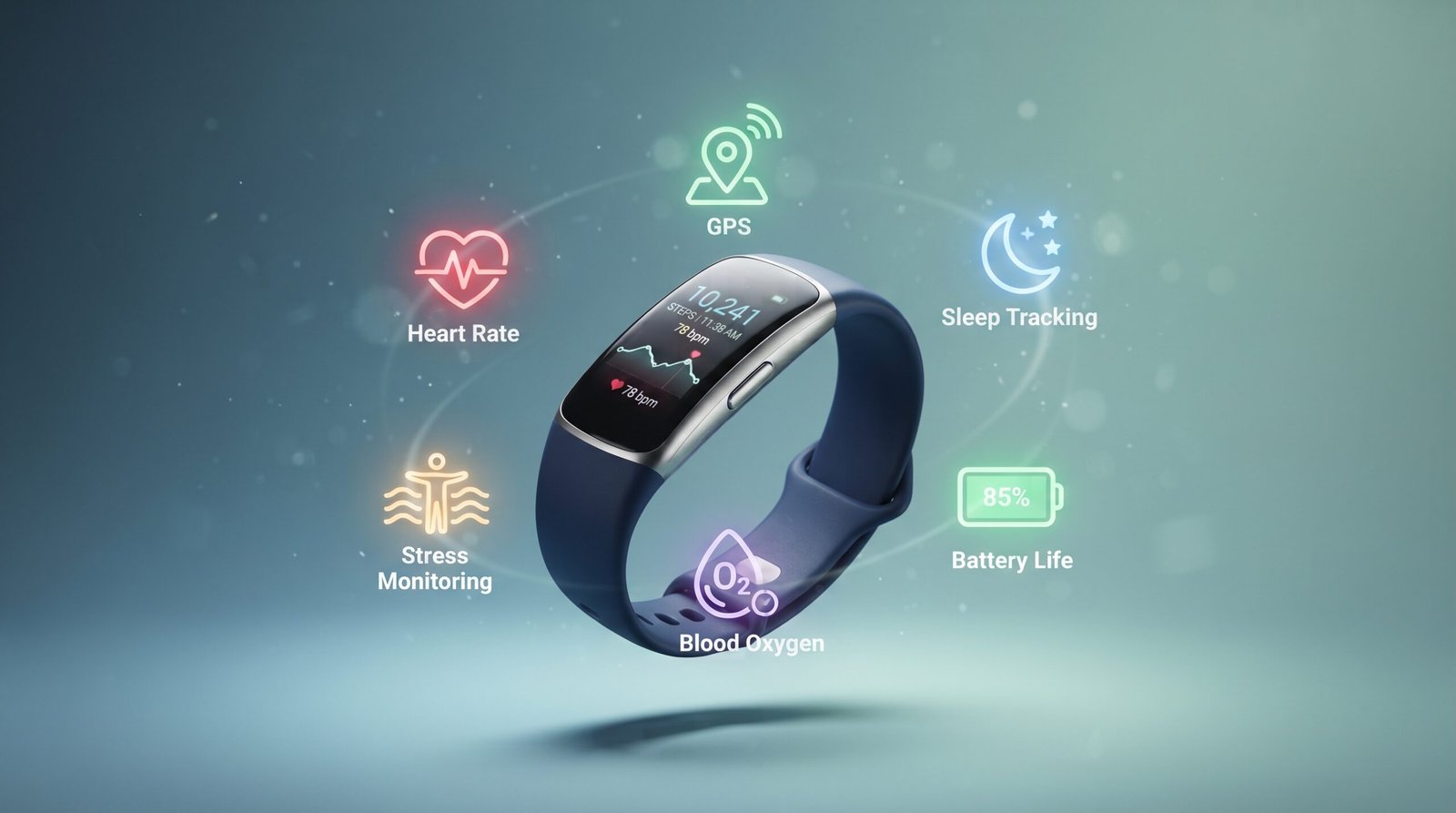
Fitbit Charge 7 Release Date (2026): Latest Rumors, Expected Features, Price & Everything We Know

Wondering When the Fitbit Charge 7 Will Be Released?
The Fitbit Charge series has long been one of the most popular fitness tracker lineups for people who want powerful health tracking without paying smartwatch prices. Whether you’re monitoring your heart rate, counting daily steps, tracking workouts, or improving sleep quality, the Charge lineup has consistently offered an excellent balance between features, battery life, and affordability.
After the success of the Fitbit Charge 6, many Fitbit fans are now looking ahead to its successor. Searches for terms like “Fitbit Charge 7 release date,” “Fitbit Charge 7 rumors,” and “Will there be a Fitbit Charge 7?” continue to grow as users wonder what Google’s next-generation fitness tracker will offer.
Although Fitbit has not officially announced the Charge 7, there is already significant interest in what the company could introduce. Based on Fitbit’s product history, industry trends, Google’s increasing focus on artificial intelligence, and the evolution of wearable technology, the next Charge model has the potential to deliver meaningful improvements over its predecessor.
In this comprehensive guide, we’ll explore everything currently known and reasonably expected about the Fitbit Charge 7, including:
- Expected release timeline
- Rumored hardware upgrades
- Possible health and fitness features
- Battery life expectations
- Design improvements
- Expected pricing
- Whether it’s worth waiting for
- Fitbit Charge 7 vs Fitbit Charge 6 comparison
Rather than relying on hype, this guide separates confirmed information from speculation so you can make an informed buying decision.
Is Fitbit Charge 7 Officially Announced?
As of now, Fitbit has not officially confirmed the Fitbit Charge 7.
There has been:
- No official launch announcement
- No press release
- No product page
- No confirmed specifications
- No official release date
This means that any website claiming to know the exact launch date or final specifications should be treated with caution unless Fitbit publicly confirms the information.
However, that doesn’t mean there’s nothing to discuss.
Technology companies rarely reveal new wearable devices months before launch. Instead, product expectations are often built using previous release patterns, industry trends, patent filings, software developments, supply chain reports, and historical product strategies.
For that reason, while we can’t confirm exactly what the Fitbit Charge 7 will include, we can make educated observations based on Fitbit’s previous product evolution.
Throughout this article, we’ll clearly distinguish between:
- Officially confirmed information
- Industry expectations
- Reasonable predictions
- Rumors that remain unverified
This approach helps readers avoid misinformation while staying informed about what may come next.
Fitbit Charge Series: How We Got Here
To understand what the Fitbit Charge 7 could become, it’s helpful to look back at how the Charge series has evolved over the years.
Fitbit originally designed the Charge lineup as a simple activity tracker focused on everyday fitness. Over time, however, each generation introduced more advanced health monitoring capabilities, gradually transforming the Charge into a compact health companion rather than just a step counter.
Here’s a quick overview of the series’ evolution.
| Model | Major Highlights |
|---|---|
| Fitbit Charge 2 | Continuous heart-rate tracking, guided breathing sessions |
| Fitbit Charge 3 | Swim tracking, improved touchscreen, better battery life |
| Fitbit Charge 4 | Built-in GPS, Active Zone Minutes |
| Fitbit Charge 5 | AMOLED display, ECG, EDA stress sensor, redesigned body |
| Fitbit Charge 6 | Google Maps, Google Wallet, improved heart-rate accuracy, YouTube Music controls |
Looking at this progression, a clear pattern emerges.
Instead of making dramatic cosmetic changes every year, Fitbit typically focuses on improving health tracking accuracy, expanding software capabilities, and refining the user experience.
That strategy has helped the Charge series remain one of the most recommended fitness trackers for users who don’t necessarily need a full smartwatch.
Expected Fitbit Charge 7 Release Date
One of the biggest questions surrounding Fitbit’s next fitness tracker is exactly when it will launch.
At this time, Fitbit has not shared any official release schedule.
However, examining previous launch cycles provides useful context.
Historically, Fitbit has not followed the same annual release strategy used by many smartphone manufacturers. Instead, the company generally introduces new Charge devices when there are meaningful hardware or software improvements ready for consumers.
This slower product cycle has several advantages:
- Better battery optimization
- More mature software
- Significant hardware improvements
- Longer product lifespan
- Reduced pressure for unnecessary yearly upgrades
Because of this strategy, many users continue using their Fitbit Charge devices for several years before upgrading.
Industry watchers generally expect Fitbit to continue this approach with the Charge 7 rather than rushing a minor refresh.
Google’s ownership of Fitbit may also influence development timelines. Instead of releasing products simply to meet annual schedules, Google appears more focused on integrating Fitbit’s health platform with its growing ecosystem of Pixel devices, Wear OS, Google AI, and Fitbit Premium services.
If that trend continues, the Fitbit Charge 7 is likely to launch only when it offers meaningful improvements over the Charge 6 rather than incremental changes.
Until Fitbit officially confirms its plans, any exact release date should be viewed as speculation.

Why the Fitbit Charge Series Remains So Popular
Even with increasing competition from Garmin, Amazfit, Samsung, Huawei, Xiaomi, and Apple, the Fitbit Charge series continues to attract millions of users worldwide.
The reason is surprisingly simple.
It offers many of the features people actually use every day without introducing the complexity, higher cost, or shorter battery life associated with full-featured smartwatches.
Unlike many smartwatches that require charging every day or two, Fitbit Charge devices typically deliver several days of battery life while still providing continuous health tracking.
For everyday users, that’s a major advantage.
Some of the biggest reasons people continue choosing the Fitbit Charge include:
Excellent Battery Life
One of Fitbit’s strongest selling points has always been efficiency.
Instead of maximizing processing power, Fitbit prioritizes low power consumption, allowing users to wear the tracker continuously—including overnight for sleep monitoring—without constantly worrying about charging.
This is especially valuable for users who rely on long-term health metrics like resting heart rate, sleep trends, recovery scores, and stress tracking.
Comprehensive Health Monitoring
Modern Fitbit devices do far more than count steps.
Depending on the model, users can monitor:
- Heart rate throughout the day
- Sleep stages
- Blood oxygen trends
- Stress responses
- Skin temperature changes
- Exercise intensity
- Calories burned
- Distance traveled
- Active Zone Minutes
These insights help users build healthier habits rather than simply tracking workouts.
Lightweight and Comfortable Design
Many people dislike sleeping with large smartwatches.
The Fitbit Charge series solves this problem by remaining slim, lightweight, and comfortable enough for 24-hour wear.
Because sleep tracking has become one of Fitbit’s strongest features, comfort continues to play an important role in the product’s design philosophy.
Another reason for the Charge’s popularity is pricing.
While flagship smartwatches often cost several hundred dollars, the Fitbit Charge lineup has traditionally remained accessible to a much wider audience.
For users who primarily want fitness tracking instead of advanced smartwatch functionality, the Charge series often provides significantly better value.
Strong Fitbit Ecosystem
Over the years, Fitbit has built one of the most comprehensive health platforms available for consumers.
The Fitbit app allows users to view long-term trends, compare workouts, analyze sleep quality, monitor heart-rate changes, and set personalized goals.
With Google now overseeing Fitbit’s development, many users expect even deeper integration between Fitbit services and Google’s broader ecosystem in future devices.
Expected Fitbit Charge 7 Features: What Could Be New?
One of the biggest reasons people are excited about the Fitbit Charge 7 isn’t just because it’s the next model—it’s because the Charge lineup has consistently introduced meaningful improvements rather than unnecessary upgrades. Fitbit has traditionally focused on enhancing health tracking accuracy, refining the user experience, and gradually expanding smart features without sacrificing battery life.
Since Google acquired Fitbit, expectations have become even higher. Many users hope the next-generation tracker will combine Fitbit’s industry-leading health platform with Google’s software ecosystem to deliver a more intelligent and personalized fitness experience.
While Fitbit has not officially revealed any specifications for the Charge 7, several features are widely expected based on previous product evolution and current wearable technology trends.
A More Refined and Comfortable Design
The Fitbit Charge 6 already introduced a mature and premium-looking design that was slimmer than earlier generations while remaining lightweight enough for all-day wear.
Instead of completely redesigning the device, Fitbit is more likely to refine what already works.
Potential design improvements may include:
- Even thinner bezels around the display
- Slightly slimmer overall body
- Improved aluminum frame durability
- Stronger scratch-resistant glass
- Better comfort for overnight sleep tracking
- New band colors and premium accessories
- Easier strap replacement mechanism
Fitbit has always prioritized comfort because many users wear their tracker 24 hours a day. A bulky device would negatively affect sleep tracking, one of Fitbit’s strongest selling points.
For this reason, dramatic size increases seem unlikely.
Brighter AMOLED Display
The AMOLED display introduced on the Fitbit Charge 5 represented one of the biggest visual upgrades in the series.
The Charge 6 continued using AMOLED while improving responsiveness and brightness.
For the Fitbit Charge 7, users can reasonably expect additional improvements such as:
Improved Outdoor Visibility
Many runners and cyclists struggle to read smartwatch screens under direct sunlight.
A brighter display would make workout data easier to read during outdoor activities such as:
- Running
- Cycling
- Hiking
- Walking
- Golf
- Outdoor training
Better Automatic Brightness
Current wearable devices increasingly rely on ambient light sensors.
The Charge 7 may introduce faster and more accurate brightness adjustments depending on lighting conditions, helping balance visibility with battery efficiency.
Improved Touch Responsiveness
Sweaty hands can sometimes make touchscreen navigation less responsive during workouts.
Expected improvements include:
- Faster swipe recognition
- More responsive taps
- Smoother menu transitions
- Reduced accidental touches
Although these improvements may appear minor individually, they contribute significantly to the overall user experience during everyday use.
More Watch Faces
Customization has become increasingly important.
Users may gain access to:
- Additional digital watch faces
- Health-focused dashboards
- Workout-focused layouts
- Minimal battery-saving designs
- Larger time displays
- Personalized color themes
Google’s design language could also influence future Fitbit interface customization.
Improved Heart Rate Tracking
Heart-rate monitoring remains one of Fitbit’s strongest competitive advantages.
The Charge 6 already introduced improvements in heart-rate accuracy during exercise.
The next generation could refine these capabilities even further.

Better Accuracy During High-Intensity Exercise
Heart-rate sensors traditionally struggle during:
- HIIT workouts
- Weight training
- CrossFit
- Rowing
- Cycling
- Interval running
Improved algorithms may reduce sudden heart-rate spikes and drops caused by wrist movement during these activities.
Improved Resting Heart Rate Monitoring
Resting heart rate remains one of the most valuable long-term health metrics.
A more accurate sensor could help users better understand:
- Recovery
- Cardiovascular fitness
- Illness detection
- Training readiness
- Stress levels
Long-term trends often provide more useful health insights than single daily measurements.
Faster Heart Rate Sampling
Future sensors could collect readings more frequently without significantly affecting battery life.
More data points may improve:
- Exercise intensity calculations
- Fat burn estimates
- Cardio fitness analysis
- Workout summaries
Sleep Tracking Could Become Even Smarter
Sleep tracking has become one of Fitbit’s signature features.
Many users purchase Fitbit devices primarily because of the detailed sleep insights available through the Fitbit app and Fitbit Premium.
The Fitbit Charge 7 may continue expanding these capabilities.
More Detailed Sleep Analysis
Future improvements could include deeper analysis of:
- REM sleep
- Deep sleep
- Light sleep
- Wake periods
- Sleep consistency
- Sleep timing
Rather than simply showing how long users slept, Fitbit increasingly focuses on helping users understand sleep quality.
Personalized Sleep Recommendations
Artificial intelligence may help Fitbit generate more personalized recommendations.
For example, users could receive suggestions based on long-term trends, including:
- Earlier bedtime recommendations
- Recovery advice after poor sleep
- Sleep consistency goals
- Weekly sleep summaries
- Personalized improvement plans
These insights could make sleep tracking more actionable rather than simply informational.

Enhanced Stress Management
Stress tracking has become an increasingly important feature across wearable devices.
The Fitbit Charge series already incorporates tools that help users better understand how stress affects overall health.
The Charge 7 could build on this foundation.
Possible improvements include:
- Better stress trend analysis
- More frequent mindfulness reminders
- Guided breathing sessions
- Personalized relaxation recommendations
- Recovery tracking
- Daily mental wellness insights
As wearable technology evolves, stress management is becoming just as important as physical fitness tracking.
ECG and Heart Health Monitoring
Health monitoring continues to expand across wearable devices.
The Fitbit Charge lineup already introduced ECG functionality in supported regions.
If Fitbit continues this trend, users can reasonably expect continued support for:
- ECG monitoring
- Irregular heart rhythm notifications
- Resting heart-rate analysis
- High and low heart-rate alerts
It’s important to remember that wearable devices are not medical diagnostic tools. However, they can provide valuable information that users may choose to discuss with healthcare professionals.

Blood Oxygen (SpO2) Tracking
Blood oxygen monitoring has become a standard feature in many premium wearables.
The Fitbit Charge 7 will likely continue offering overnight SpO2 tracking as part of its health monitoring ecosystem.
Potential improvements may include:
- More consistent overnight readings
- Better historical trend visualization
- Enhanced sleep-related oxygen analysis
- Improved data presentation inside the Fitbit app
Rather than focusing on individual readings, Fitbit generally emphasizes long-term trends that may help users better understand changes in overall wellness.
Skin Temperature Monitoring
Recent Fitbit devices have included skin temperature trend tracking during sleep.
Future improvements could provide:
- More detailed overnight analysis
- Weekly trend reports
- Better integration with sleep insights
- Recovery recommendations based on long-term temperature patterns
Although this feature doesn’t diagnose illness, tracking changes over time may provide users with additional context about recovery, stress, or overall health.
Smarter Activity Recognition
One of Fitbit’s strengths is automatic workout detection.
Instead of requiring users to manually start every workout, Fitbit can recognize many common activities automatically.
The Charge 7 may improve recognition for activities such as:
- Walking
- Running
- Cycling
- Swimming
- Elliptical training
- Strength workouts
- HIIT sessions
Faster recognition means workouts are recorded more accurately without user intervention.

GPS Improvements: What Runners and Outdoor Athletes Want
Built-in GPS became one of the biggest upgrades when Fitbit introduced it to the Charge lineup. Before that, users needed to carry their smartphones to accurately record outdoor routes, pace, and distance. With onboard GPS, the Fitbit Charge series became a much more attractive option for runners, cyclists, hikers, and walkers who preferred leaving their phones behind.
The Fitbit Charge 6 already provides reliable GPS tracking, but there is still room for improvement. Many users hope the Charge 7 will deliver faster satellite connections, better route accuracy, and improved battery efficiency during long outdoor activities.
Faster GPS Lock
One of the most common complaints about wearable GPS devices is the time it takes to connect to satellites. Waiting several minutes before starting a run can be frustrating, especially for people exercising early in the morning or during short workout sessions.
The Fitbit Charge 7 could reduce this waiting time by improving satellite acquisition technology, allowing users to begin workouts almost immediately after selecting an outdoor activity.
More Accurate Route Tracking
Accuracy matters when monitoring running pace, cycling distance, or hiking routes. Small GPS errors can affect statistics such as average speed, calorie estimates, and total distance traveled.
Users would benefit from improvements like:
- Better route precision in urban areas
- Reduced signal drift under tree cover
- Improved elevation measurements
- More stable pace calculations
- Better tracking during sharp turns
For serious runners, these improvements could make training data more reliable without requiring a dedicated sports watch.
Battery Life Expectations
Battery life has always been one of Fitbit’s greatest strengths. Unlike many premium smartwatches that require charging every day or two, Fitbit Charge devices are designed to last significantly longer on a single charge.
This is one reason why the Charge series continues to appeal to users who prioritize health tracking over advanced smartwatch features.
Although Fitbit has not revealed any battery specifications for a future Charge 7, maintaining strong battery performance will almost certainly remain a priority.

Why Battery Life Matters
Continuous health tracking works best when users wear the device around the clock. Frequent charging interrupts the collection of important data, including:
- Sleep tracking
- Resting heart rate
- Recovery trends
- Stress monitoring
- Daily activity levels
Long battery life makes it easier to build a complete picture of overall health.
Possible Battery Improvements
If Fitbit introduces more efficient hardware and software optimization, users could see improvements such as:
- Longer battery life during normal daily use
- Reduced power consumption with the Always-On Display enabled
- Better GPS efficiency during outdoor workouts
- Faster charging times
- Smarter background power management
Rather than dramatically increasing battery capacity, Fitbit may focus on making the device more efficient through software optimization.
Smarter Google Integration
Since becoming part of Google, Fitbit has gradually incorporated more Google services into its products.
The Fitbit Charge 6 introduced features such as Google Maps navigation and Google Wallet, making the fitness tracker more useful beyond exercise and health monitoring.
The Charge 7 could continue expanding this integration.

Google Maps
Google Maps support allows users to receive turn-by-turn directions directly on their wrist. This feature is particularly useful for:
- Walking in unfamiliar cities
- Cycling routes
- Traveling
- Commuting
- Exploring hiking trails
Future improvements may include smoother navigation, quicker route updates, and better battery efficiency while using location services.
Google Wallet
Contactless payments have become increasingly common, allowing users to make purchases without carrying a wallet or phone.
Expanding Google Wallet support across additional banks and regions would make the Charge 7 more practical for everyday use.
Better Android Connectivity
Many Fitbit users own Android smartphones, particularly Google Pixel devices. Improved synchronization between Fitbit and Android could lead to:
- Faster notifications
- More reliable Bluetooth connections
- Better call alerts
- Enhanced messaging support
- Improved calendar integration
These refinements would strengthen Fitbit’s position within Google’s growing ecosystem.
Artificial Intelligence Could Play a Bigger Role
Artificial intelligence is becoming a major focus across Google’s products, and many wearable enthusiasts expect future Fitbit devices to benefit from these advancements.
Although Fitbit has not announced any AI-specific features for the Charge 7, there are several areas where intelligent software could improve the user experience.
Personalized Workout Recommendations
Rather than recommending generic exercise goals, future Fitbit software could analyze long-term activity trends to provide more personalized guidance.
Examples might include:
- Increasing weekly step goals based on previous performance
- Suggesting recovery days after intense workouts
- Recommending different workout types to improve overall fitness
- Adjusting activity goals during illness or reduced sleep
Smarter Health Insights
Instead of presenting raw numbers, AI could help users better understand what those numbers actually mean.
For example, Fitbit may eventually provide explanations such as:
- Why resting heart rate has changed
- How sleep quality affects workout performance
- Which habits contribute to improved recovery
- Weekly health summaries with actionable suggestions
These types of insights would make health tracking more meaningful for everyday users.

Fitbit Premium has become an important part of the Fitbit ecosystem, offering advanced health insights and personalized guidance beyond the standard Fitbit app.
While the core tracking features are available without a subscription, Premium unlocks additional tools designed to help users better understand their health over time.
The Fitbit Charge 7 will likely continue integrating closely with Fitbit Premium.
Premium features may include:
- Detailed sleep analysis
- Readiness and recovery insights
- Guided workouts
- Mindfulness sessions
- Wellness reports
- Long-term health trend analysis
- Personalized coaching
For users who enjoy diving deeper into their fitness and health data, Fitbit Premium remains one of the platform’s key advantages.
Fitbit Charge 7 vs Fitbit Charge 6: Should You Upgrade?
Many current Fitbit owners will naturally compare the upcoming Charge 7 with the existing Charge 6 before deciding whether to upgrade.
Since official specifications are not yet available, the comparison below reflects current expectations rather than confirmed features.
| Feature | Fitbit Charge 6 | Expected Fitbit Charge 7 |
|---|---|---|
| Display | AMOLED | Brighter AMOLED with thinner bezels |
| Heart Rate | Improved multi-device accuracy | Further refined sensor accuracy |
| GPS | Built-in | Faster lock and improved precision |
| Sleep Tracking | Advanced sleep stages | Smarter insights and recommendations |
| Google Apps | Maps, Wallet, YouTube Music controls | Expanded Google ecosystem integration |
| AI Features | Basic personalized insights | More advanced AI-powered health guidance |
| Battery Life | Up to approximately one week | Similar or potentially improved efficiency |
| Design | Slim aluminum body | Refined, lighter, and more durable design |
For users with older devices such as the Charge 4 or Charge 5, the Charge 7 could represent a more significant upgrade if these expected improvements become reality.
Should You Wait for the Fitbit Charge 7?
One of the most common questions from prospective buyers is whether they should purchase the Fitbit Charge 6 today or wait for the Fitbit Charge 7. The answer depends on your current device, your fitness goals, and how urgently you need a new fitness tracker.
Since Fitbit has not officially announced the Charge 7, there is no confirmed launch date. That uncertainty means waiting could take several months. If your current fitness tracker is no longer functioning properly or lacks the features you need, buying the Charge 6 may be the more practical choice. It already offers advanced health tracking, built-in GPS, Google Maps, Google Wallet, and one of the most polished software experiences Fitbit has ever delivered.
On the other hand, if you’re still using an older tracker such as the Fitbit Charge 4 or Fitbit Charge 5 and it continues to meet your daily needs, waiting for the Charge 7 could be worthwhile. The next-generation model is expected to introduce refinements in sensor accuracy, battery optimization, AI-powered health insights, and deeper Google integration.
Instead of focusing solely on having the newest model, consider whether the improvements you’re hoping for will have a meaningful impact on your daily routine. For some users, the Charge 6 already provides everything they need. Others may prefer to wait for the next generation if they value having the latest technology.
Who Should Consider Buying the Fitbit Charge 7?
Although Fitbit has not revealed the final specifications, the expected improvements suggest that the Charge 7 will appeal to a wide range of users.
Beginners Starting Their Fitness Journey
If you’re new to fitness tracking, the Fitbit Charge series remains one of the easiest devices to learn. The Fitbit app presents health information in a clear and understandable format, making it suitable for people who want to improve their overall wellness without learning complicated smartwatch software.
Expected features such as personalized coaching and smarter health insights could make the Charge 7 an even better companion for beginners.
Walkers and Daily Activity Trackers
Many people simply want to stay active throughout the day. For these users, features such as step counting, calorie tracking, distance measurement, and Active Zone Minutes are often more valuable than advanced smartwatch capabilities.
The Charge 7 is expected to continue supporting these everyday health metrics while improving accuracy and user experience.
Runners
Runners consistently rank among Fitbit’s largest user groups.
Built-in GPS, pace tracking, heart-rate monitoring, and post-workout summaries already make the Charge series an excellent training companion. If the next generation delivers faster GPS acquisition and improved sensor accuracy, it could become even more attractive for casual and intermediate runners.
Cyclists
Cyclists often rely on accurate distance tracking, route mapping, and heart-rate monitoring during long rides.
Battery efficiency and improved GPS performance would be particularly valuable for users who spend extended periods outdoors.
Gym Enthusiasts
Weight training, circuit workouts, HIIT sessions, and strength training continue to grow in popularity.
Improved heart-rate tracking during high-intensity workouts would help gym users monitor exercise intensity more accurately while maintaining detailed workout records inside the Fitbit app.
Users Focused on Health Monitoring
Not everyone buys a Fitbit primarily for exercise.
Many users are more interested in long-term health monitoring, including:
- Resting heart rate
- Sleep quality
- Recovery trends
- Stress management
- Blood oxygen trends
- Daily activity patterns
For these individuals, Fitbit’s ecosystem continues to be one of the most comprehensive consumer health platforms available.
Potential Competitors
When the Fitbit Charge 7 eventually launches, it is expected to compete with several popular fitness trackers and entry-level smartwatches.
Some of its primary competitors may include:
| Device | Best For |
|---|---|
| Fitbit Charge 6 | Users wanting a proven Fitbit experience today |
| Garmin Vivosmart Series | Advanced fitness metrics and Garmin ecosystem |
| Garmin Vívoactive Series | Active users seeking smartwatch features |
| Samsung Galaxy Fit Series | Samsung smartphone owners |
| Amazfit Band Series | Budget-conscious buyers |
| Xiaomi Smart Band Series | Affordable fitness tracking |
| Apple Watch SE | iPhone users wanting smartwatch functionality |
Each device offers different strengths. Fitbit’s biggest advantage continues to be its balance between health tracking, ease of use, long battery life, and an intuitive companion app.
Is Fitbit officially developing the Charge 7?
Fitbit has not publicly confirmed the development or launch of the Fitbit Charge 7. Until the company makes an official announcement, any information regarding specifications or release timing remains speculative.

What is the expected Fitbit Charge 7 release date?
There is currently no confirmed release date. Fitbit has historically released new Charge models when significant hardware or software improvements are ready rather than following a strict annual schedule.
Will the Fitbit Charge 7 include built-in GPS?
Although Fitbit has not confirmed any specifications, built-in GPS has become an important feature of the Charge lineup and is widely expected to continue in the next generation.
Will the Fitbit Charge 7 support Google Maps?
Because Google Maps is already available on the Fitbit Charge 6, many users expect Google to continue supporting this feature in future Charge devices.
Will Google Wallet still be available?
Google Wallet has become an important everyday feature for Fitbit users. Continued support is widely expected, although Fitbit has not released official information.
Will battery life improve?
Battery improvements are possible through better hardware efficiency and software optimization. However, Fitbit has not announced official battery specifications.
No. Core health and fitness tracking features are available without a Fitbit Premium subscription. Premium mainly provides additional insights, personalized guidance, and advanced health reports.
Should I buy the Fitbit Charge 6 instead?
If you need a fitness tracker today, the Fitbit Charge 6 remains an excellent option with modern health tracking, Google integration, and reliable performance. If you prefer owning the latest generation and are willing to wait, you may choose to wait for official Charge 7 announcements.
Final Verdict
The Fitbit Charge series has earned its reputation by delivering dependable health tracking, impressive battery life, and an easy-to-use experience at a price that appeals to a wide range of users. Rather than chasing every smartwatch trend, Fitbit has consistently focused on helping people understand and improve their overall health.
Although the Fitbit Charge 7 has not yet been officially announced, expectations are understandably high. Users hope to see more accurate health sensors, brighter display technology, improved GPS performance, smarter AI-driven insights, and tighter integration with Google’s growing ecosystem.
Until Fitbit releases official information, it’s important to separate confirmed facts from rumors. While predictions based on previous product cycles can provide useful context, the final specifications, pricing, and release timeline will only be known once Fitbit makes a formal announcement.
If you need a capable fitness tracker today, the Fitbit Charge 6 remains one of the strongest options available. However, if your current device continues to meet your needs and you’re interested in the latest innovations, waiting for the Fitbit Charge 7 could be a worthwhile decision.
As soon as Fitbit shares official details, this guide should be updated to reflect confirmed information, ensuring readers always have access to the most accurate and up-to-date resource available.