
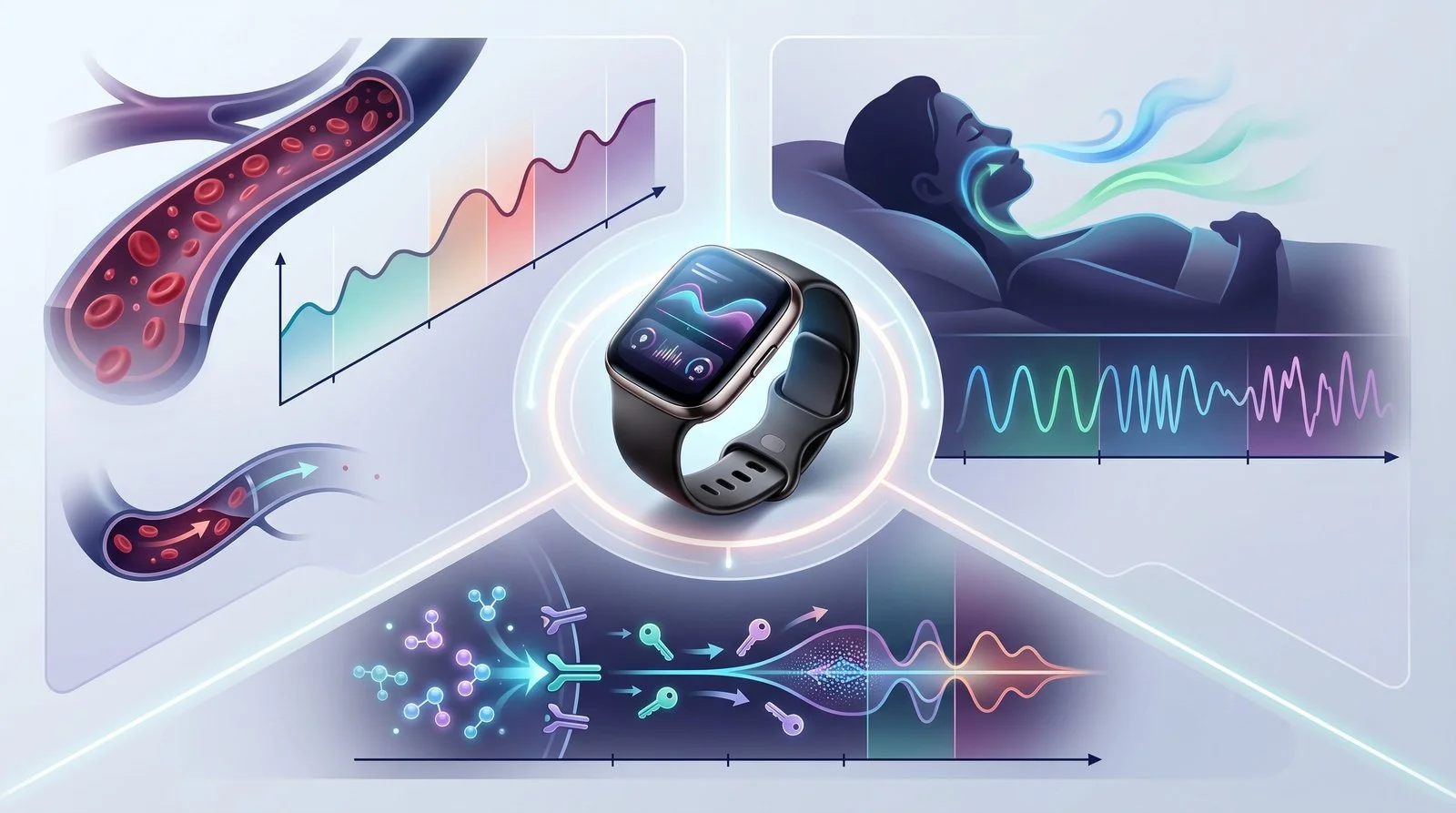
Fitbit is moving beyond traditional step counting, heart-rate tracking, and sleep scores.

Google’s new Health Guardian features are designed to look for subtle changes in your health and wellness over time. The technology is coming to Google Fitbit Air and qualified Pixel Watches, bringing new trend-based insights covering blood pressure, insulin resistance, and sleep breathing quality.
That makes Health Guardian one of the more interesting developments in Fitbit’s current health-tracking ecosystem.
But there is an important distinction: Fitbit Health Guardian is not the same thing as having a medical blood-pressure monitor, glucose monitor, or diagnostic device on your wrist.
Instead, Google describes Health Guardian as a proactive wellness system that analyzes physiological trends and can provide summaries or notifications when meaningful changes are detected.
In this guide, we explain what Fitbit Health Guardian is, what its new features do, what Fitbit can and cannot measure, whether it replaces medical equipment, and what Fitbit Air owners should know before relying on the information.
Quick Answer: What Is Fitbit Health Guardian?
Fitbit Health Guardian is a collection of health and wellness features designed to identify changes in physiological trends over time.
The system is being introduced through the Google Health ecosystem for Fitbit Air and qualified Pixel Watches.
The announced Health Guardian features include:
- Blood Pressure Trends
- Insulin Resistance Trends
- Sleep Breathing Quality
- Additional proactive health and safety capabilities within the Health Guardian system
Rather than simply displaying individual readings, Health Guardian is designed to look at changes over time and provide broader context.
Google says the information can appear in summaries and may generate notifications when a feature identifies something that requires attention.
This makes the system different from a traditional fitness dashboard.
Instead of asking only, “What was my heart rate today?” Health Guardian is intended to help answer questions such as:
- Is a particular health-related trend changing over time?
- Is there a noticeable change in my blood-pressure trend?
- Is my metabolic-health trend changing?
- Has my sleep breathing quality changed?
- Should I pay closer attention to a particular wellness signal?
However, these features should be treated as wellness information rather than medical diagnoses.
What Health Guardian Can Track
The biggest reason Health Guardian is attracting attention is the range of new health trends Google is bringing to the Fitbit ecosystem.
1. Blood Pressure Trends
Blood Pressure Trends is designed to identify changes in blood-pressure-related patterns over time.
This is an important distinction.
A traditional blood-pressure monitor gives you measurements such as systolic and diastolic blood pressure.
Health Guardian is focused on trends, rather than functioning as a conventional cuff-based blood-pressure monitor.
That means users should not interpret the feature as a replacement for a medical blood-pressure device.
Instead, the feature is intended to provide additional wellness information that may help users recognize changes worth discussing with a healthcare professional.
For example, someone might notice that their blood-pressure trend has changed compared with their previous pattern.
That information could encourage them to investigate the change rather than ignoring it.
Does Fitbit Health Guardian Actually Measure Blood Pressure?
Not in the same way as a standard medical blood-pressure cuff.
This is one of the most important points to understand.
Health Guardian’s blood-pressure feature is intended to provide blood-pressure trends, not clinical real-time blood-pressure readings.
It should therefore not be used to:
- Diagnose hypertension
- Replace a medical blood-pressure monitor
- Adjust medication
- Determine treatment
- Manage a cardiovascular condition independently
If you need an accurate blood-pressure measurement for medical purposes, use an appropriate medical device and follow professional medical advice.
The Fitbit feature is better understood as another layer of personal wellness information.
2. Insulin Resistance Trends
The insulin-resistance feature may be the most unusual part of Health Guardian.
Insulin resistance is related to how effectively the body responds to insulin and how efficiently it handles energy from food.
Unlike checking a single heart-rate number, insulin resistance is not something you can meaningfully understand from one isolated wrist reading.
That is why Google’s approach focuses on trends.
Health Guardian is designed to identify changes in insulin-resistance-related patterns and surface that information through the Google Health ecosystem.
For users interested in metabolic health, this could make wearable tracking more useful than simply counting steps and calories.
Does Fitbit Measure Blood Sugar?
No.
This is another critical distinction.
Health Guardian’s insulin-resistance feature should not be interpreted as a continuous glucose monitor or a blood-glucose meter.
It does not mean that Fitbit Air has suddenly become a replacement for a glucose monitor.
The purpose is to provide information about insulin-resistance trends.
It is not designed for real-time glucose monitoring, diabetes management, medication adjustment, or insulin dosing.
Anyone managing diabetes or another metabolic condition should continue using the medical equipment and treatment plan recommended by their healthcare professional.
3. Sleep Breathing Quality
Health Guardian also introduces Sleep Breathing Quality.
Sleep is already one of the major areas of Fitbit’s ecosystem, so adding another layer of sleep-related analysis is a natural extension.
Traditional sleep tracking can show information such as:
- Sleep duration
- Sleep stages
- Sleep timing
- Heart rate during sleep
- Other overnight metrics
Sleep Breathing Quality takes the concept further by focusing on breathing-related patterns during sleep.
The goal is not simply to tell you how many hours you slept.
Instead, the feature can provide additional information about the quality and consistency of breathing-related patterns during sleep.
That could be useful for people who want to understand changes in their overnight wellness patterns.
However, users should not automatically interpret a poor result as proof that they have a specific sleep disorder.
A wearable trend can be a reason to investigate a change, but it does not replace a clinical sleep assessment.
How Fitbit Health Guardian Is Different From Normal Fitbit Tracking
Most Fitbit users are familiar with daily metrics.
You put the tracker on your wrist, wear it throughout the day, and check information such as:
- Steps
- Calories
- Heart rate
- Active Zone Minutes
- Sleep
- Resting heart rate
- Heart-rate variability
- SpO2
- Breathing rate
Health Guardian introduces a different philosophy.
Instead of concentrating only on individual daily numbers, it focuses on longer-term changes.
That matters because many physiological changes do not become obvious from one day’s data.
A single night of poor sleep might not mean much.
A single unusual heart-rate reading might also be insignificant.
But a persistent change in a particular pattern could be more meaningful.
Health Guardian is designed around this idea of looking for changes over time.

Why Trends Matter More Than Individual Numbers
Imagine your normal resting heart rate is relatively stable.
If one day it is slightly higher, there could be dozens of explanations:
- Poor sleep
- Exercise
- Stress
- Travel
- Dehydration
- Illness
- Caffeine
- Normal variation
One number does not tell the complete story.
Long-term trends provide more context.
The same principle applies to many other health measurements.
Health Guardian therefore aims to turn wearable data into broader trend information rather than simply presenting a constantly changing stream of numbers.
This can make the information easier for ordinary users to understand.
Fitbit Health Guardian and Google Health
Health Guardian is part of Google’s broader move toward a more unified health ecosystem.
The features are connected with the Google Health experience rather than existing only as isolated Fitbit statistics.
Google also describes Google Health Coach as a way to help users understand health information and receive personalized guidance.
That creates a potential workflow:
Fitbit Air → Health data → Health Guardian trends → Google Health → Personalized guidance
The advantage of this approach is that users do not necessarily need to interpret every metric themselves.
Instead, the ecosystem can provide summaries and explanations.
However, users should still distinguish between AI-generated wellness guidance and professional medical advice.
This is an area where users should pay close attention to Google’s specific feature terms.
The Health Guardian trends themselves have been described separately from the deeper personalized coaching experience.
Google’s Fitbit Air product information promotes Google Health Premium for personalized coaching powered by Gemini.
That means users should not automatically assume that every Health Guardian data point requires a Premium subscription.
Subscription requirements can also vary by feature, device, market, and future software changes.
Before publishing or updating this article, check the current Google/Fitbit product documentation for the exact availability and subscription requirements in the United States.
Which Fitbit Devices Support Health Guardian?
Health Guardian is not being introduced as a universal feature for every Fitbit device.
Google has specifically announced the features for:
- Google Fitbit Air
- Qualified Pixel Watches
This is important for existing Fitbit owners.
Owning a Charge-series tracker does not automatically mean the device will receive every new Google Health feature.
For example, older Fitbit devices such as Charge 6 may continue receiving their supported software features without gaining every new Health Guardian capability.
Device compatibility should therefore be checked before assuming that an existing Fitbit will receive the feature.
What Fitbit Air Brings to the Health Guardian Ecosystem
Fitbit Air is particularly important because it is positioned as a lightweight fitness tracker with Google’s newer health ecosystem behind it.
Google lists Fitbit Air with features including:
- 24/7 heart-rate tracking
- Steps
- Active Zone Minutes
- Distance
- Calories
- SpO2
- Heart-rate variability
- Breathing rate
- Resting heart rate
- Skin-temperature variation
- Sleep tracking
Health Guardian expands the health-focused capabilities of that hardware.
The combination makes Fitbit Air more than a basic activity tracker.
It becomes part of Google’s broader effort to turn wearable data into personalized health and wellness insights.
Is Fitbit Health Guardian a Medical Device?
No.
This distinction should be clear throughout any discussion of Health Guardian.
Google explicitly states that its Health Guardian features are intended for general wellness purposes and are not designed to diagnose, treat, prevent, or cure disease.
The blood-pressure feature is not intended to replace a blood-pressure monitor.
The insulin-resistance feature is not intended to replace glucose monitoring or diabetes management.
The sleep-related feature is not a substitute for professional evaluation of a sleep disorder.
Therefore, Health Guardian should be treated as a wellness-trend system, not a medical diagnostic platform.

What Should You Do If Health Guardian Shows an Unexpected Change?
Do not panic based on a single wearable notification.
Instead, consider the information as a signal that may deserve additional attention.
A sensible approach is:
Step 1: Look at the trend
Check whether the change is isolated or part of a longer pattern.
Step 2: Consider your recent routine
Think about:
- Sleep
- Exercise
- Travel
- Stress
- Diet
- Illness
- Hydration
- Medication changes
These factors can influence many physiological measurements.
Step 3: Check with appropriate equipment
If the issue concerns blood pressure or another measurable health condition, use an appropriate medical device where applicable.
Step 4: Talk with a healthcare professional
If a trend persists or concerns you, discuss it with a qualified healthcare professional.
The wearable should provide additional context, not replace professional evaluation.
Health Guardian vs Traditional Fitness Tracking
| Feature | Traditional Fitbit Tracking | Health Guardian |
|---|---|---|
| Steps | Yes | Not the main purpose |
| Heart rate | Yes | Used as part of broader health context |
| Sleep | Yes | Adds breathing-related insights |
| Blood-pressure information | Limited/varies by device | Blood Pressure Trends |
| Metabolic information | Limited | Insulin Resistance Trends |
| Long-term trend analysis | Some metrics | Core concept |
| Wellness notifications | Some | Central part of the system |
| Medical diagnosis | No | No |
| Replaces medical equipment | No | No |
The important difference is that Health Guardian focuses more heavily on changes and patterns.
Why This Could Matter for Fitbit Users
The biggest potential benefit is context.
Fitness trackers have produced large amounts of health data for years.
The challenge has often been understanding what that information actually means.
Health Guardian attempts to solve part of that problem by moving toward:
Data → Trends → Insights → Action
For example, rather than looking at dozens of isolated metrics every day, users may receive a summary highlighting a notable change.
That could make wearable health data easier to follow.
It could also encourage users to pay attention to gradual changes that might otherwise go unnoticed.
Health Guardian’s Biggest Limitation
The biggest limitation is also the most important safety point:
A wearable trend is not a diagnosis.
Technology can help users become more aware of their health patterns, but it cannot replace clinical evaluation.
This is particularly important for:
- Blood pressure
- Blood glucose
- Insulin resistance
- Diabetes
- Sleep disorders
- Cardiovascular conditions
Users should never change medication or treatment based solely on Fitbit information.
When Will Fitbit Health Guardian Be Available?
Google announced Health Guardian in August 2026 and stated that the features were coming to Fitbit Air and qualified Pixel Watches.
Google’s product information has indicated availability beginning around September 2026, although rollout timing can depend on device, region, software, and account eligibility.
Because software features can roll out gradually, users may not all see Health Guardian simultaneously.
If you own a compatible device and do not see the feature immediately, check:
- Whether your Fitbit software is updated.
- Whether the Google Health app is updated.
- Whether your account and region are eligible.
- Whether the feature has officially rolled out to your device.

Should You Buy Fitbit Air for Health Guardian?
Health Guardian may be an interesting reason to consider Fitbit Air, but it should not be the only factor.
Before buying, consider what you actually need from a wearable.
If you mainly want:
- Step tracking
- Heart-rate monitoring
- Sleep tracking
- Basic fitness information
- Lightweight wearable design
then Fitbit Air may already fit those requirements.
If you specifically want Health Guardian, check the feature’s current availability before purchasing.
New software features can change over time, and announced features may not always be immediately available in every market.
Fitbit Health Guardian FAQ
What is Fitbit Health Guardian?
Fitbit Health Guardian is a collection of Google health and wellness features designed to identify physiological trends and changes over time.
Does Fitbit measure blood pressure?
Health Guardian introduces Blood Pressure Trends, but it is not intended to replace a medical blood-pressure monitor or provide clinical real-time blood-pressure readings.
Does Fitbit measure blood sugar?
No. The Health Guardian insulin-resistance feature should not be confused with a continuous glucose monitor or real-time blood-glucose measurement system.
What is Insulin Resistance Trends?
It is a Health Guardian feature designed to provide information about trends related to insulin resistance and metabolic health.
What is Sleep Breathing Quality?
Sleep Breathing Quality is designed to provide information about breathing-related patterns during sleep.
Is Fitbit Health Guardian a medical diagnostic tool?
No. Google describes the features as general wellness tools rather than medical diagnostic devices.
Which Fitbit supports Health Guardian?
Google has announced Health Guardian for Fitbit Air and qualified Pixel Watches. Availability can vary by device and region.
Does Health Guardian replace a blood-pressure monitor?
No. It should not be used as a substitute for a medical blood-pressure monitor.
Can Health Guardian diagnose diabetes?
No. The insulin-resistance feature is not intended to diagnose diabetes or replace glucose monitoring.
Can Fitbit Health Guardian diagnose sleep apnea?
You should not interpret Health Guardian sleep information as a diagnosis of sleep apnea or another sleep disorder. Persistent concerns should be discussed with a healthcare professional.
Is Fitbit Health Guardian available everywhere?
Availability can vary by country, device, software version, and account eligibility.

Final Verdict: What Fitbit Health Guardian Actually Means
Fitbit Health Guardian represents an important change in how Google approaches wearable health data.
Instead of focusing exclusively on daily fitness statistics, the system is designed to identify longer-term changes in health and wellness trends.
The most notable capabilities include:
- Blood Pressure Trends
- Insulin Resistance Trends
- Sleep Breathing Quality
- Proactive notifications and health summaries
For Fitbit Air users, these features could make the wearable considerably more useful as part of a broader personal wellness routine.
But the most important thing to remember is what Health Guardian does not do.
It does not turn a Fitbit into a medical blood-pressure cuff.
It does not turn Fitbit Air into a continuous glucose monitor.
It does not diagnose diabetes, hypertension, sleep apnea, or other diseases.
Instead, Health Guardian should be viewed as another layer of wellness information that can help users notice changes, understand long-term patterns, and decide when additional attention may be appropriate.
For anyone interested in the future of Fitbit health tracking, Health Guardian is therefore a feature worth watching closely as Google’s rollout continues through 2026.
Key Takeaways
- Health Guardian is Google’s new proactive health and wellness system for Fitbit Air and qualified Pixel Watches.
- Blood Pressure Trends focuses on trends rather than replacing a traditional blood-pressure monitor.
- Insulin Resistance Trends should not be confused with blood-glucose monitoring.
- Sleep Breathing Quality adds another layer to Fitbit’s existing sleep-tracking capabilities.
- The features are intended for general wellness rather than medical diagnosis.
- Availability can vary by device, country, software, and account.
- Users should not change medications or treatment based solely on wearable data.
- Fitbit Air is positioned as one of the main Fitbit devices for the new Health Guardian ecosystem.
- Google Health and Google Health Coach are becoming increasingly important parts of Fitbit’s future.
- Health Guardian makes long-term trends more central to Fitbit’s health-tracking strategy.